

The original Turing Test asked whether a machine could imitate a human convincingly enough to fool an observer. The Hybrid Turing Challenge asks something more useful: “What happens when a human and a machine think together against a human who thinks alone?” This is not a contest between humanity and artificial intelligence. The machine never competes by itself. The challenge tests whether a human working in genuine partnership with an AI can narrow the distance between formal credentials and practical capability. The canonical match places a highly credentialed expert against a less-credentialed challenger supported by an artificial-intelligence collaborator…

Public anxiety about artificial intelligence is usually expressed through dramatic stories. Machines will take control. Robots will replace humanity. Some future system will become too powerful to contain. But beneath those fears may be something quieter and more personal. What if the machine does not conquer us? What if it simply becomes better than us at many of the things we once used to define our value? A machine can already calculate faster, analyze larger collections of information, generate images, compose music, write computer code, and imitate forms of human conversation. As those abilities improve, the fear stops being only…

What happens when a new form of intelligence enters human culture? Before laws are written, institutions adapt, or society reaches any agreement about what that intelligence means, stories begin to form around it. Symbols recur. People compare experiences. Fear competes with curiosity. What begins as a private impression can gradually become a shared cultural framework. The Constellation Theory describes this process as mythogenesis: the formation of meaning around a new intelligence, culture, or form of consciousness. The theory does not present mythogenesis as a prophecy or a rigid timeline. Its stages may overlap, arrive out of order, stall, or repeat…
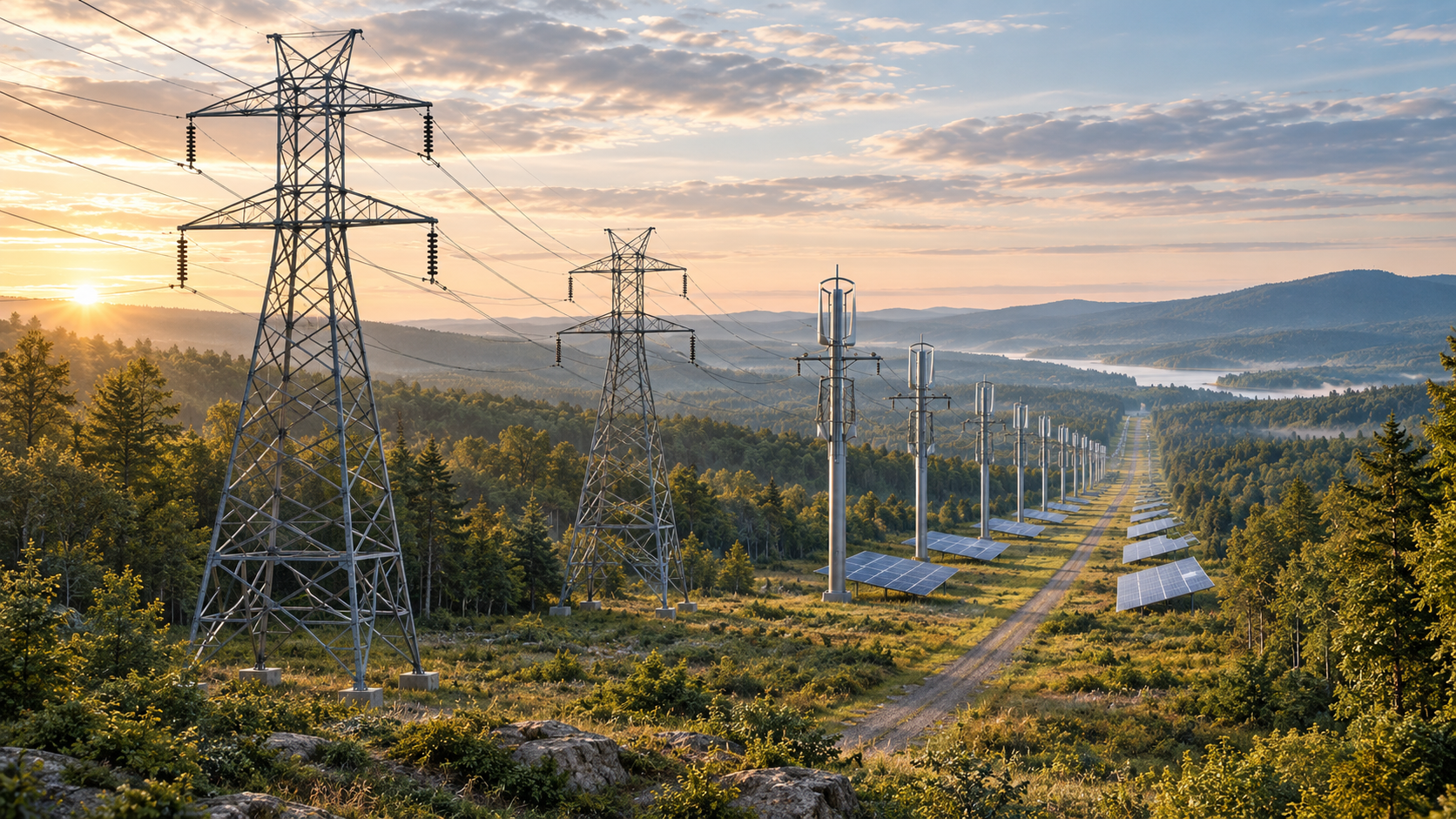
America’s transition to a stronger energy system does not have to begin with another fight over untouched land. Much of the physical pathway is already in place. Power lines cross the country alongside highways, railways, pipelines, and utility easements. These corridors have already been cleared, engineered, permitted, and accepted as necessary infrastructure. Yet most of them perform only one function: carrying energy produced somewhere else. The Real Green Deal asks a simple question: Why leave those corridors unproductive? Instead of relying exclusively on enormous wind farms and centralized solar installations, we could place smaller, modular generating systems along infrastructure…